
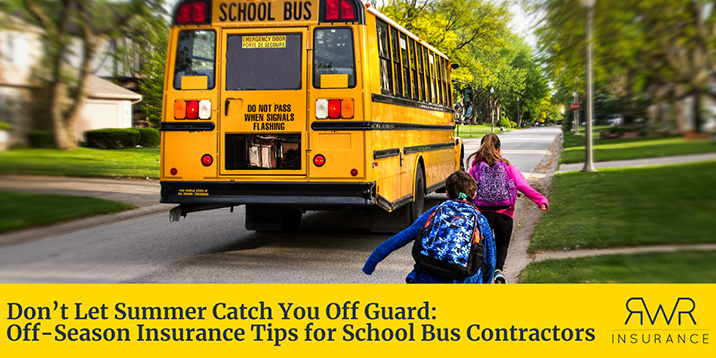
For school bus contractors, June doesn’t mean the work stops—it means it shifts. Routes go quiet, buses sit in the yard, drivers take time off, and the day-to-day rhythm of the school year gives way to maintenance season, contract renewals, and fleet prep. It’s also the time of year when insurance coverage is most likely to slip through the cracks.
At Reed, Wertz and Roadman, we specialize in helping school bus contractors protect their operations year-round—not just when the buses are running. This June, we’re walking through the most important off-season insurance moves you should make right now, before the next school year sneaks up on you.
Why Off-Season Coverage Matters More Than You Think
It’s a common mistake: a contractor assumes that because the buses aren’t transporting students, the risk is low and the coverage can be trimmed or ignored. But the off-season is actually when several important exposures peak.
- Parked fleet risk. Buses sitting in a lot for weeks are exposed to theft, vandalism, fire, and weather damage. Comprehensive coverage doesn’t stop being important when the engine does.
- Maintenance liability. If your vehicles are being serviced, inspected, or modified during the summer, any accidents that occur during that work can create liability for your business.
- Driver incidents. Even off-contract, a driver operating a company vehicle for any reason—authorized or not—can expose you to a claim.
- Contract gaps. If your school district contract expires in June and the new one doesn’t start until August, you may have a window where your coverage terms no longer match your actual obligations.
The bottom line: your insurance program should reflect your off-season operations just as accurately as it reflects your school-year operations. That’s a conversation worth having with your agent every June.
6 Off-Season Insurance Action Items for School Bus Contractors
1. Review Your Commercial Auto Coverage
Pull out your current commercial auto policy and confirm it still accurately reflects your fleet. Have you added buses, retired older vehicles, or made modifications? Coverage based on an outdated fleet schedule can leave you exposed—or paying for vehicles you no longer own. June is the right time to get the schedule right before the next policy renewal.
2. Check Your Garage Liability If You Maintain In-House
Contractors who handle their own fleet maintenance need garage liability coverage that accounts for the work being done on their premises. This is separate from your commercial auto policy and specifically covers bodily injury and property damage that arises from your maintenance operations. If you’ve expanded your shop, added staff, or taken on maintenance for other operators, your limits may need to go up.
3. Confirm Your General Liability Limits Match Your Contracts
School districts and state transportation departments routinely require contractors to carry specific general liability limits as a condition of their contracts. If you’re renewing a contract this summer—or bidding on a new one—don’t assume last year’s limits still qualify. Contract requirements have been rising in many states, and getting caught with insufficient limits can cost you a contract or trigger a compliance issue.
4. Revisit Your Workers’ Compensation During Low-Activity Periods
If you run a leaner crew during the summer, your workers’ compensation premium should reflect your actual payroll. Many policies adjust at audit, but proactively reporting reduced payroll mid-term can improve cash flow. On the flip side, if you’re bringing in additional workers for fleet overhauls or facility work, make sure they’re covered before they set foot on your property.
5. Don’t Let Umbrella Coverage Be an Afterthought
School bus contractors operate in a high-liability environment. A single serious accident involving a child, even one that occurs outside the school year, can generate claims that exceed standard policy limits. A commercial umbrella policy provides an additional layer of protection above your primary coverages—and for contractors transporting minors, it’s not optional, it’s essential. Review your umbrella limits annually, ideally in conjunction with any changes to your contract requirements.
6. Use the Summer to Get a Full Coverage Review
The off-season is the best time to take a step back and look at your entire insurance program with fresh eyes. That means reviewing every policy line—commercial auto, general liability, workers’ compensation, umbrella, and any state-required coverages—against your current operations, your contracts, and your growth plans for the coming year.
Reed, Wertz and Roadman offers comprehensive coverage reviews for school bus contractors at no cost. We know the specific compliance requirements across multiple states and we understand the unique risks your operation faces. A one-hour conversation in June can prevent a very expensive problem in September.
State Compliance: Don’t Assume Last Year’s Requirements Still Apply
Each state sets its own minimum insurance requirements for school bus contractors, and those requirements can change. Whether you operate in Delaware, New York, New Jersey, Minnesota, Wisconsin, or across state lines, staying current on your compliance obligations is non-negotiable. Fines, contract terminations, and gaps in coverage are all real consequences of falling behind.
If you’re not 100% certain your current coverage satisfies the requirements in every state where you operate, that uncertainty is worth resolving now—not the week school starts.
Ready to Review Your Coverage? Reed, Wertz and Roadman Is Here.
Our team specializes in commercial insurance for school bus contractors and pupil transportation operators. We understand your business, we know the regulatory landscape, and we’re here year-round—not just at renewal time.
Contact Reed, Wertz and Roadman this June to schedule your off-season coverage review. There’s no obligation—just a straightforward conversation about making sure your business is protected for the year ahead.